What does “жополиз” mean in English?
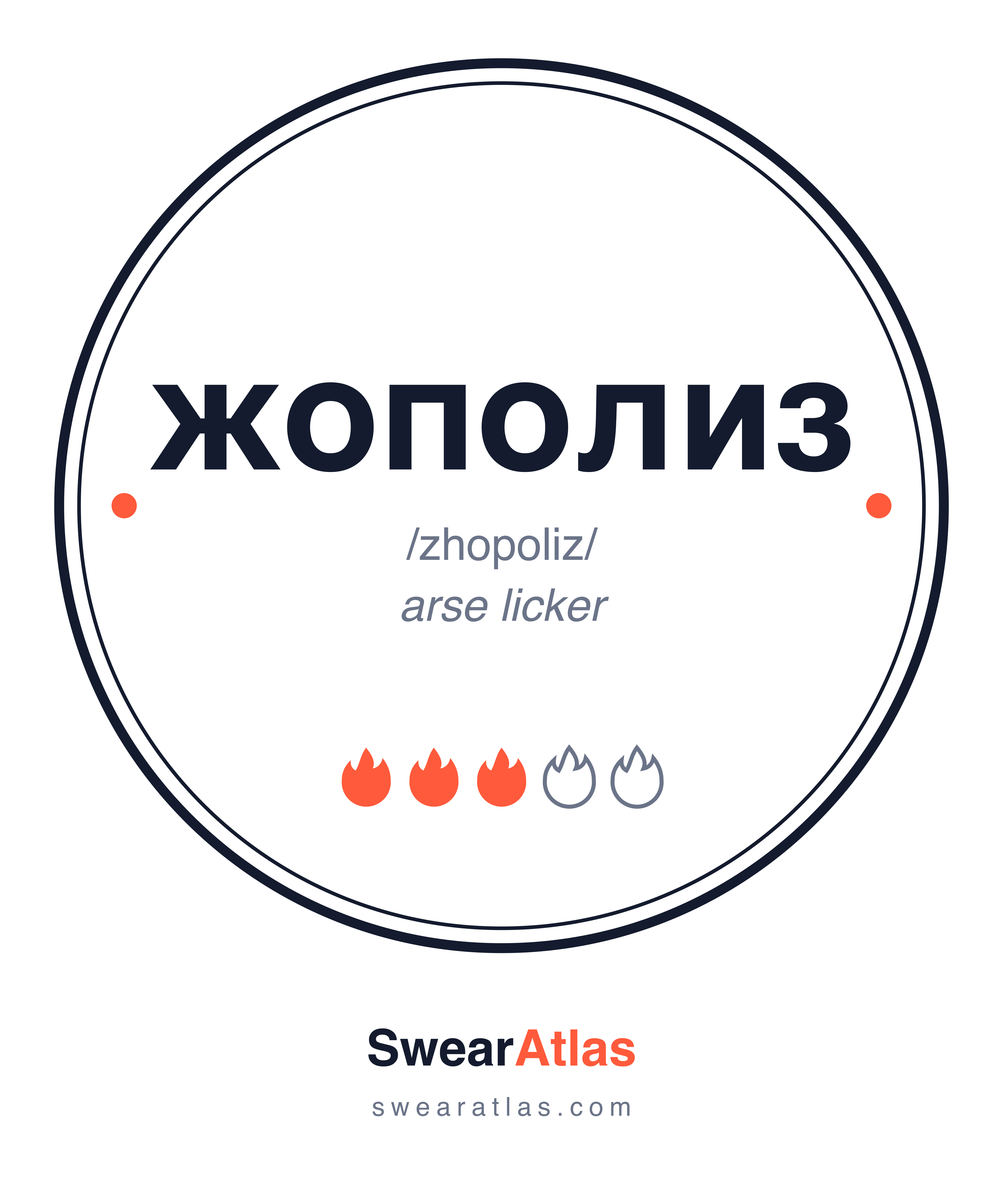
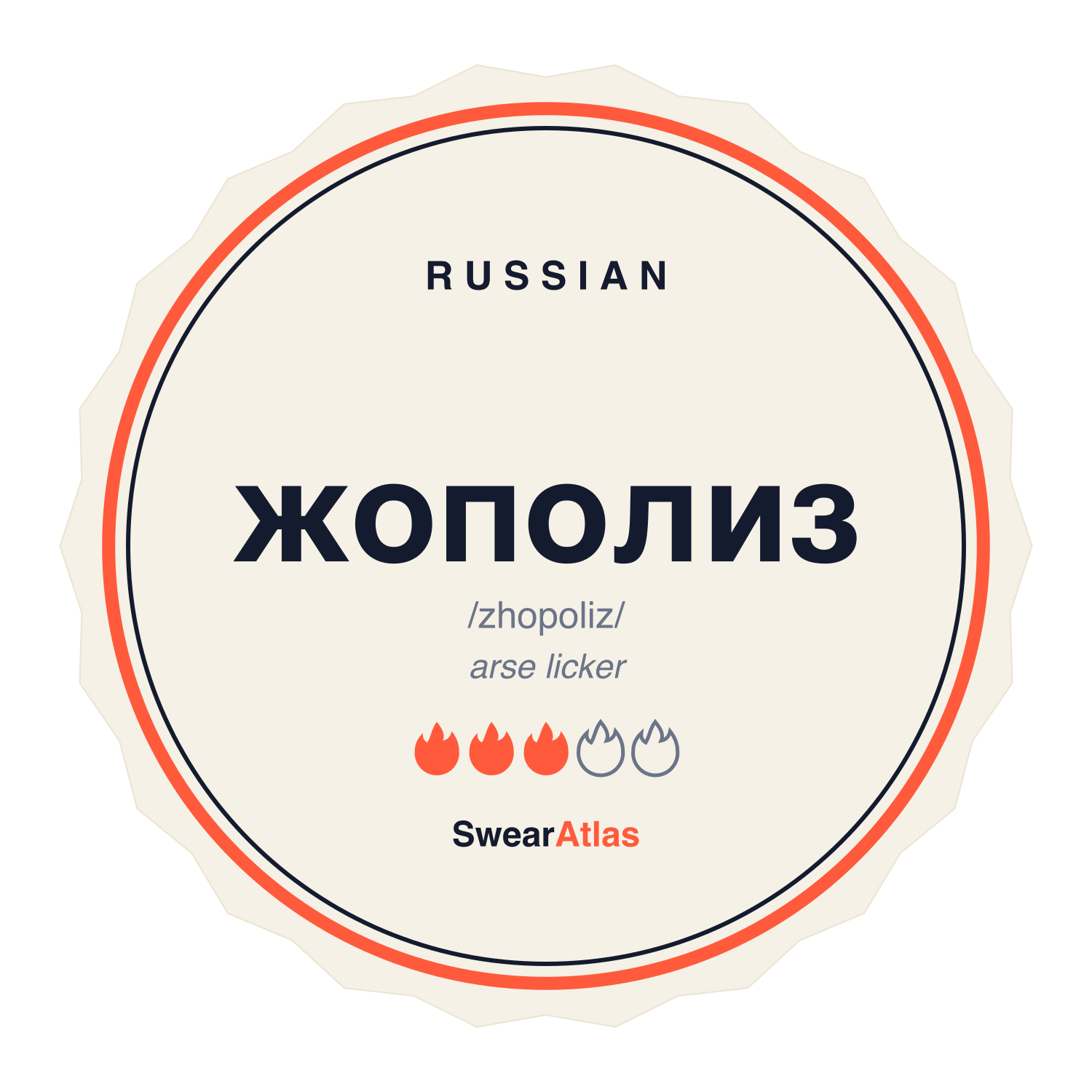
This is an insult used for someone who is a sycophant or excessively flattering towards others, often to gain favor. Literally, it translates to 'arse licker.'
Literally “arse licker”
It's aimed directly at someone to criticize their obsequious behavior, similar to calling someone a 'brown-noser' in English. It carries a moderate level of rudeness and is typically used in informal contexts.
Take it with you
Wear it. Stick it. Drink from it.
Put жополиз on a mug, a T-shirt or a sticker as Swear Atlas stamp artwork. You'll finish your order with Zazzle, our print partner — they handle payment, printing and delivery.

Adult/mature product · 18+. Purchases, delivery, returns and support are provided by Zazzle, not Swear Atlas. Availability is subject to Zazzle's policies.
Related Russian words
говнюк
3/5 · Vulgargovnyuk
It's an insult that means 'shit person,' akin to calling someone a little shit. It's often used to express disdain for someone's character or actions.
засранец
3/5 · Vulgarzasranets
It's an insult similar to calling someone a little shit or a bastard. Literally, it refers to a person soiled with excrement, which adds a layer of disgust.
козёл
3/5 · Vulgarkozyol
This is an insult used for a nasty or objectionable man, similar to calling someone a 'dick' in English. The literal translation is 'male goat', but that's not how it's used in conversation.
мудозвон
3/5 · Vulgarmudozvon
It's a derogatory term for someone who talks a lot without saying anything meaningful, essentially calling them a fool. It criticizes their speech or behavior.
About this data
Swear Atlas is a source-attested, AI-curated reference — not a native-speaker-certified dictionary. Meanings and the 1–5 Burn Rating are approximate editorial assessments that vary with context, region, tone and speaker. Inclusion of a word does not constitute endorsement of its use.
The literal gloss is a short editorial translation to show word-for-word sense, not an etymological claim.
“Sounds like” is an English-friendly approximation of how the word sounds, not an authoritative pronunciation. Where shown, the romanisation is a conventional Latin-script transliteration of the original spelling.
Term attested via LDNOOBW, Viddexa SafeText, FlacSy/BadWords (CC-BY-4.0, MIT, MIT AND CC-BY-4.0). Editorial content © Swear Atlas.