botter le cul
What does “botter le cul” mean in English?
It means to give someone a strong rebuke or to defeat them decisively. Literally, it translates to 'kick the arse.'
Literally “kick the arse”
You might hear it in contexts where someone is being told off or beaten in a competition, similar to saying 'kick someone's ass' in English. It can be used both figuratively and literally, depending on the situation.
Take it with you
Wear it. Stick it. Drink from it.
Put botter le cul on a mug, a T-shirt or a sticker as Swear Atlas stamp artwork. You'll finish your order with Zazzle, our print partner — they handle payment, printing and delivery.
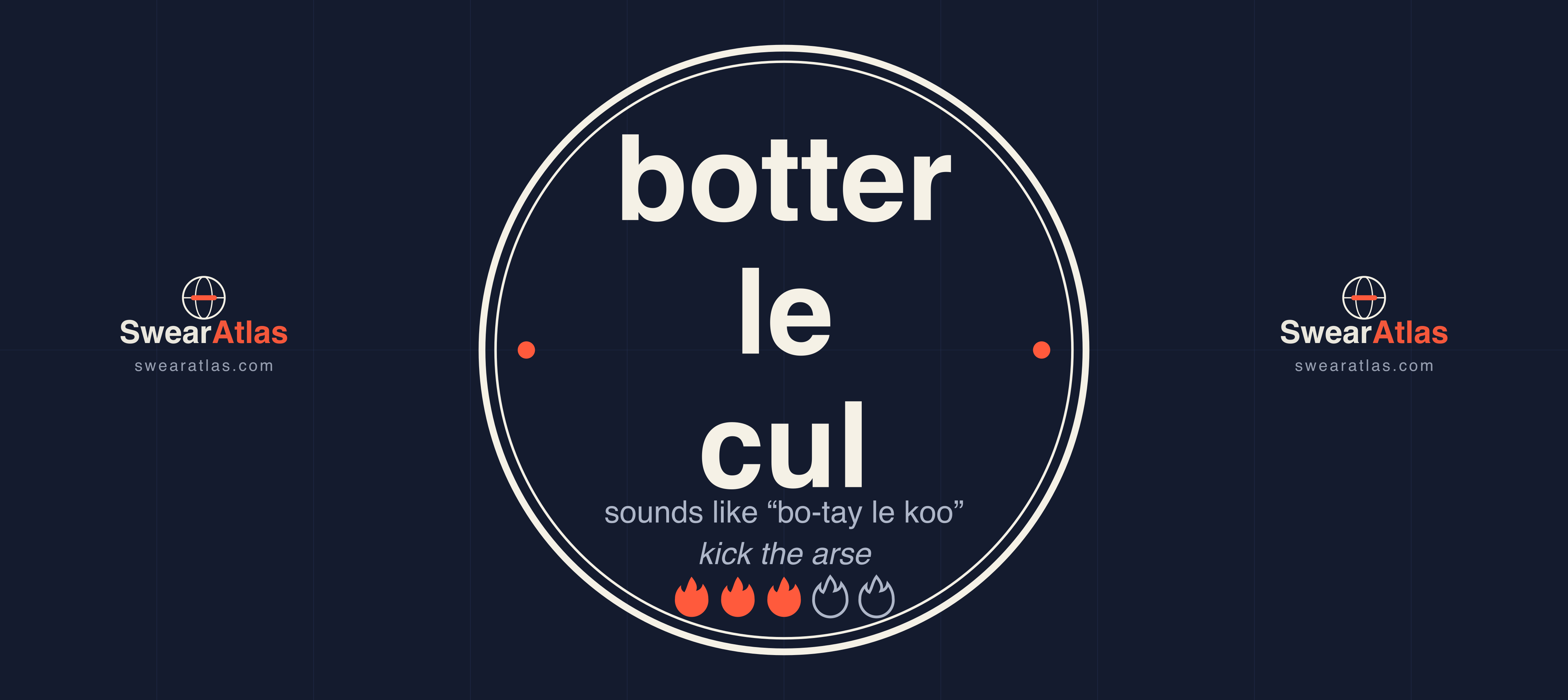
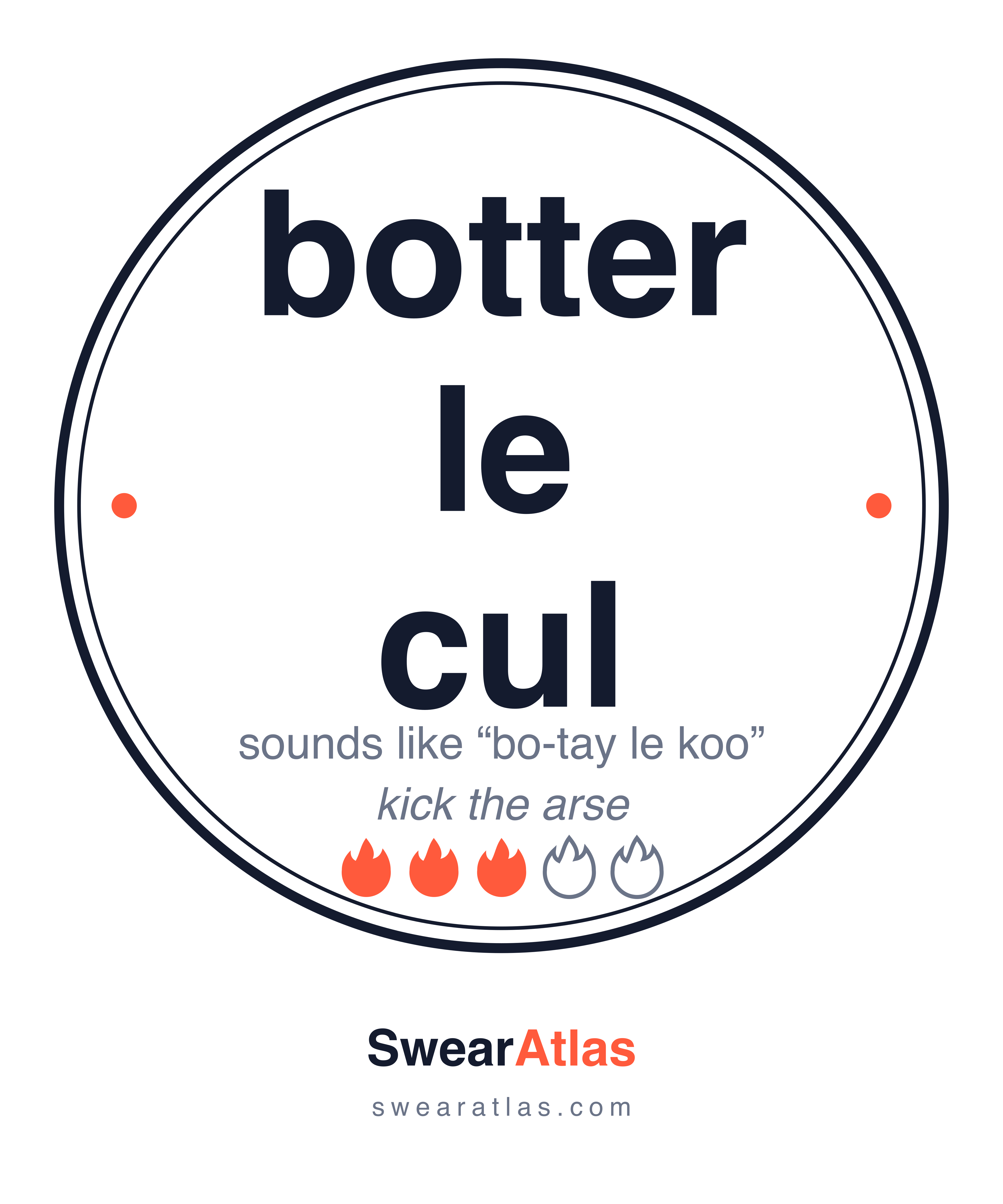
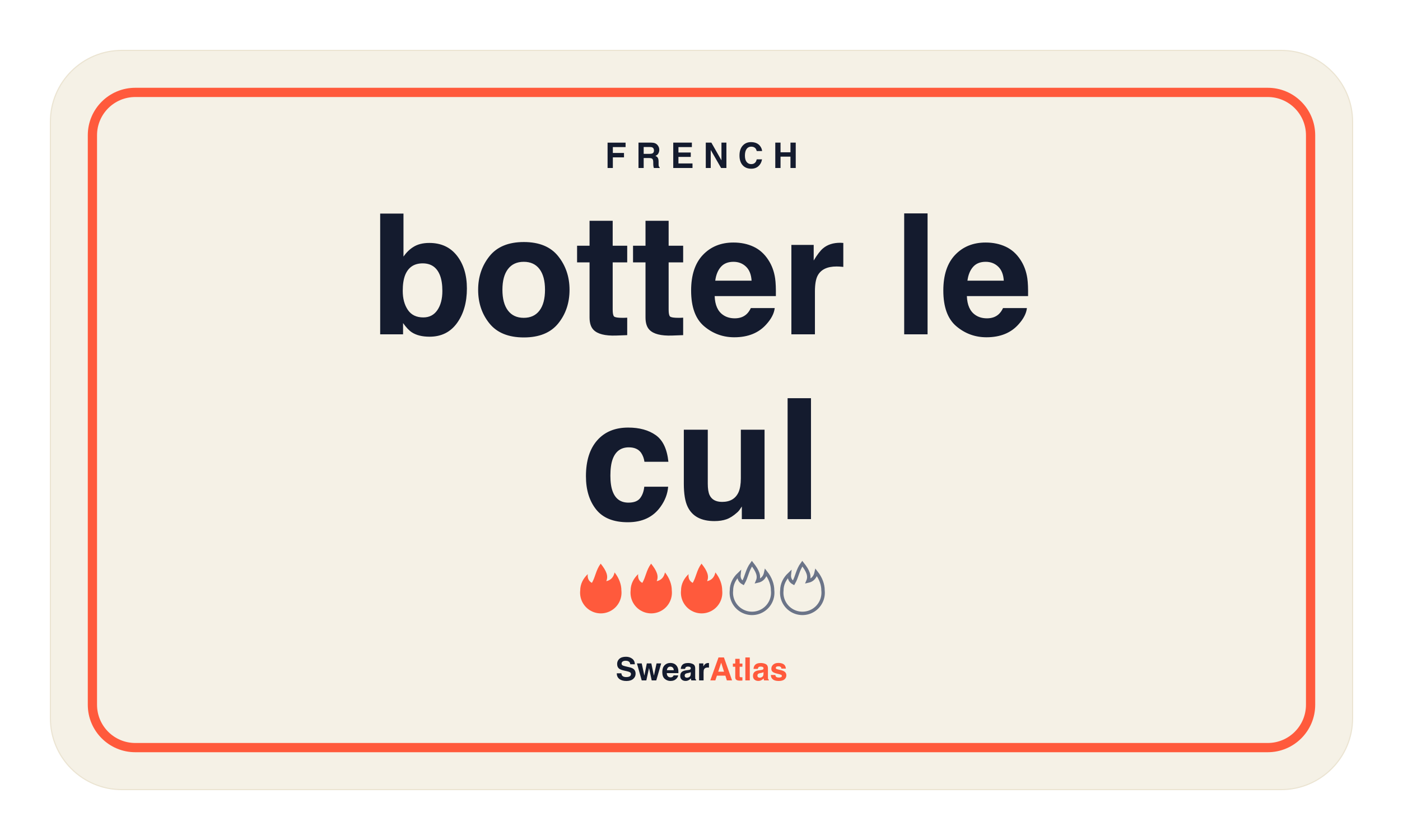
Adult/mature product · 18+. Purchases, delivery, returns and support are provided by Zazzle, not Swear Atlas. Availability is subject to Zazzle's policies.
Related French words
branlée
3/5 · VulgarIt refers to a significant defeat or crushing loss, often used in a sports context. It can also imply a physical beating in more violent situations.
se foutre de la gueule de
3/5 · VulgarIt means to mock someone or treat them like a fool. It's a dismissive way of saying you don't take someone seriously.
engueuler
2/5 · CoarseIt means to tell someone off angrily or to bawl them out. It's more about scolding than using obscenities.
brise-burnes
3/5 · VulgarThis refers to someone or something that is extremely annoying or bothersome. The literal translation, 'testicle breaker,' adds a humorous twist to the annoyance.
About this data
Swear Atlas is a source-attested, AI-curated reference — not a native-speaker-certified dictionary. Meanings and the 1–5 Burn Rating are approximate editorial assessments that vary with context, region, tone and speaker. Inclusion of a word does not constitute endorsement of its use.
The literal gloss is a short editorial translation to show word-for-word sense, not an etymological claim.
“Sounds like” is an English-friendly approximation of how the word sounds, not an authoritative pronunciation. Where shown, the romanisation is a conventional Latin-script transliteration of the original spelling.
Term attested via Viddexa SafeText (MIT). Editorial content © Swear Atlas.